
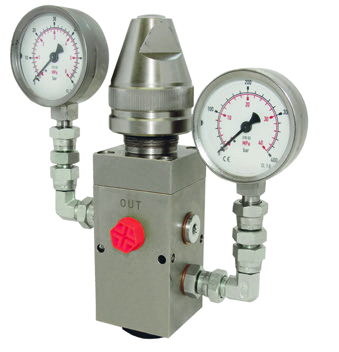
Why Pressure Regulation Matters
Without a material fluid pressure regulator, variations in pump output pressure (such as pulsations from reciprocating pumps or changes due to system backpressure) can lead to:
- Inconsistent feed rates
- Erratic metering valve performance
- Excessive wear or premature component failure
- Material surges that compromise lubrication precision
A properly regulated lubrication system improves repeatability, system stability, and service life of pumps and valves.
Common Performance Characteristics
Pressure regulators from Kirkco are designed to deliver:
- Stable outlet pressure even with upstream fluctuations
- Reduced pulsation effects, contributing to smoother downstream flow
- Improved metering accuracy and repeatability
- Extended service life for metering and dispensing valves
- Wide compatibility with greases, oils, and industrial lubricant types
These regulators can be configured with multiple pressure setpoints based on application demands and material viscosity.
Piston‑Type Material Fluid Pressure Regulator
A robust regulator using a piston mechanism to maintain a stable outlet pressure for grease, oil, and other lubricants. Designed for industrial environments where steady pressure is critical for feeding metering valves and dispensing systems.
Key Features:
- Pneumatic or spring‑balanced piston design
- Maintains a stable set pressure downstream
- Low maintenance, high durability
- Handles medium to high pressures
- Suitable for grease, oil, and similar fluid media
Ideal For:
- Central lubrication systems
- Metrology‑critical dispense applications
- Feed to metering/dispensing valves
Diaphragm‑Type Material Fluid Pressure Regulator
A regulator utilizing a diaphragm seal to isolate the spring and control chamber from the material path. This design is ideal for sensitive or abrasive fluids, including greases with fillers or fluids sensitive to contamination.
Key Features:
- Diaphragm isolation protects control components
- Resistant to abrasive and reactive materials
- Good chemical compatibility for diverse lubricants
- Smooth, stable pressure output
- Easy adjustment and serviceability
Ideal For:
- Abrasive or filled grease applications
- Silicones, polyurethanes, and specialty lubricants
- Systems where material‑friendly designs are required
Typical Industrial Applications
Material fluid pressure regulators are used in systems where precision lubricant delivery and stable pressure are essential, including:
- Automated lubrication networks in manufacturing facilities
- Centralized grease and oil distribution systems
- High‑accuracy metering and dispensing stations
- Maintenance and machine tool lubrication
Automated assembly applications demanding repeatable feed
By stabilizing pressure and reducing pulsation, these regulators help optimize system performance and reduce wear on pumps, valves, and delivery components.
Why Choose Kirkco Pressure Regulators
Kirkco’s material fluid pressure regulators are engineered for industrial reliability, robust performance, and compatibility with a wide range of lubrication materials. They integrate seamlessly with:
- Pumps (low, medium, and high pressure)
- Metering valves
- Electronic metering and control systems
- Centralized lubrication networks
This makes them a powerful component in comprehensive lubrication solutions.