
Main Categories
We can also help with
Contact Us!
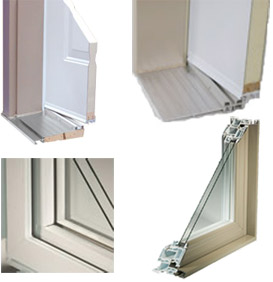
Kirkco delivers precision metering, mixing, and dispensing systems tailored for the windows and doors manufacturing industry to improve seam sealing, gasketing, and assembly operations. Our solutions support the controlled application of sealants, foams, and adhesives across rigid, flexible, and structural materials, helping manufacturers increase quality and reduce waste. Designed for reliable performance in both manual and automated production lines, Kirkco systems ensure consistent, repeatable material placement. These capabilities help window and door producers enhance product durability, energy efficiency, and production throughput.
In windows and doors production, accurate material dispensing is critical for weatherproofing, structural integrity, and aesthetic quality. Kirkco systems deliver high-precision metering and controlled dispensing of a wide range of sealants, adhesives, and gasketing materials used in frame assembly and glass bonding. Our equipment is engineered to handle varying viscosities and cure profiles while minimizing material waste and rework. With repeatable performance, manufacturers can achieve tighter tolerances, cleaner finish, and improved overall product consistency.
Kirkco supports manufacturers at every scale, from bench-top and semi-automatic dispensing units to fully integrated automated production systems. Our solutions integrate with conveyors, robotics, and vision systems to support repeatable, high-speed operations while reducing labor variability. With configurable process control and robust industrial design, these systems maintain performance in continuous, high-volume environments. This scalability allows windows and doors manufacturers to optimize throughput and quality while adapting to evolving product designs.
Engineering Engagement
Ready to Engineer Your New System?
Kirkco supports confidential engineering engagements under NDA. Discuss your application requirements with our team and receive a system architecture tailored to your process.
Have a process challenge that cannot be solved with off-the-shelf equipment?
Dispense & Regulate
1K & 2K Systems
Kirkco engineered a dynamic mixing retrofit architecture to modernize glass façade sealing and bonding operations, reducing operating costs and material waste.
Replace legacy mixing systems with high waste and cleaning overhead.
Dynamic inline mixing eliminates flushing, reduces pressure, and stabilizes output.
Add-on dynamic mixer integrated into existing sealing and bonding lines.
Reduced cleaning labor, lower material loss, and annual operating cost savings.
Kirkco supports retrofit and process-optimization projects under NDA.
Kirkco engineered a fully automated polyurethane bonding architecture enabling high-volume glazing assemblies to be produced domestically through robotics and precision dispensing.
Automation deployed to offset labor cost, reduce logistics exposure, and enable reshoring.
Fast-curing two-component polyurethane replaces silicone; cure time reduced to ~10 minutes.
Multi-robot cell applies adhesive and positions glass with repeatable accuracy.
Reduced inventory, improved throughput, stabilized quality.
Kirkco supports reshoring and adhesive automation under NDA.
Kirkco engineered an automated polyurethane adhesive bonding architecture for a European manufacturer of aluminum and glass assemblies. The system enabled production reshoring by replacing labor-driven assembly with a high-throughput robotic cell, delivering cost control, cycle-time reduction, and consistent bond quality.
The manufacturer sought to reverse offshore production due to escalating logistics costs, extended delivery times, and supply-chain inefficiencies. Automation was selected as the strategic lever to offset labor costs while restoring domestic production capability.
The bonding process transitioned from a single-component silicone adhesive to a fast-curing two-component polyurethane adhesive. This change reduced adhesive cure time to approximately 10 minutes, enabling near-immediate shipment and significantly reducing finished-goods inventory.
The solution consists of a robotic adhesive dispensing cell integrating multiple industrial robots with precision two-component metering and mixing systems. Polyurethane adhesive is proportioned at a controlled ratio of approximately 100:10 and dispensed directly onto aluminum frames prior to glass placement.
Base material and catalyst components are supplied directly from original drums via high-capacity drum pumps, ensuring uninterrupted material flow to the metering and mixing units. This architecture minimizes manual handling and stabilizes process consistency.
Two robots apply the metered and mixed polyurethane adhesive to the aluminum frames, while a third robot places glass panels into position. Dispensing output is tightly regulated to ensure optimal adhesive volume, supporting repeatable bond integrity across all assemblies.
The automated cell supports dispensing rates up to approximately 300 ml per minute, with output precisely controlled to meet quality standards. The integrated automation cell enabled production cost parity with offshore manufacturing while improving delivery responsiveness.
By investing in purpose-built automation, the manufacturer successfully repatriated production, reducing logistics exposure and improving communication, lead times, and overall operational control.
Kirkco supports manufacturers evaluating reshoring, automation, or adhesive process modernization through confidential engineering consultations under NDA. Our team assesses labor displacement potential, material selection, automation scope, and ROI to architect scalable production systems.