Low Pressure Metering

Low-Pressure Metering Systems for Efficient Polyurethane Processing

Low-pressure metering refers to systems designed to meter and mix two-component polyurethane materials at moderate pressures, making them ideal for small to medium production runs, low-pressure foams, elastomers, coatings, and C.A.S.E. polyurethanes (coatings, adhesives, sealants, and elastomers). These machines deliver accurate metering and mixing at lower operating pressures, while handling a broad range of component viscosities and production requirements.

Low-pressure metering is often chosen when gentler dispensing is needed — such as when materials are shear-sensitive, require multiple independent stream processing, or when pump wear must be minimized over extended service life.
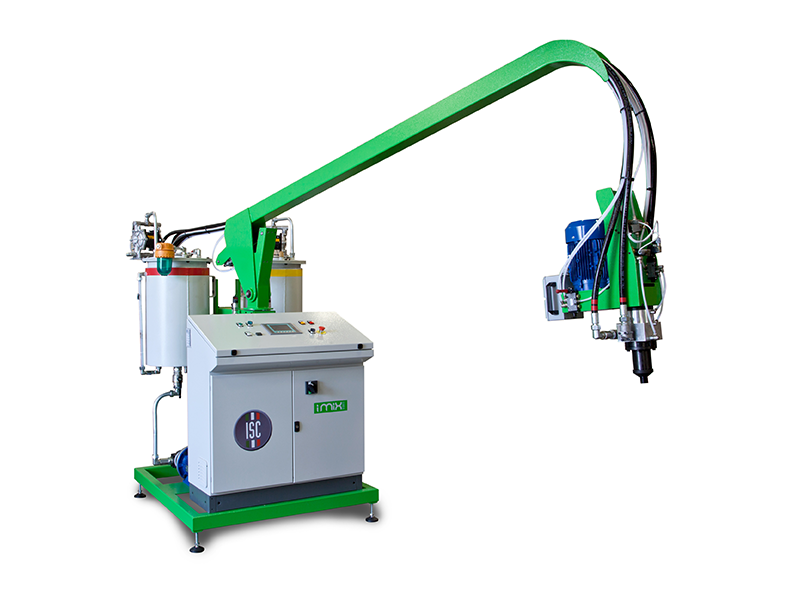
Our Low Pressure Metering Options

Why Low-Pressure Metering Matters

Low-pressure metering systems are valued because they:

  • Handle variable viscosities, including high-viscosity polyurethanes, with ease.
  • Deliver repeatable material ratios even as output rates vary.
  • Reduce wear on pumps and valves compared with high-pressure systems in certain applications.
  • Are well-suited for both batch and continuous processes.
  • Support foam, elastomer, and specialty coating applications where gentle metering yields better quality.

Common Industrial Applications

Low-pressure metering systems are used in a variety of polyurethane processing scenarios, including:

  • Low-pressure polyurethane foam production, such as flexible or integral skin foams.
  • Elastomeric coatings and sealants are dispensed in automotive and appliance markets.
  • Laboratory and prototyping environments where flexible ratio control is needed.
  • Furniture and building materials, where smooth, low-pressure delivery improves product quality.

How Low-Pressure Metering Works

Low-pressure metering machines typically operate with the following stages:

Material Feed: Components A and B are supplied from tanks with agitators or conditioning to maintain consistent viscosity.

Metering: Pumps meter each component independently at precise ratios with controlled flow, but at lower system pressures compared with high-pressure metering.

Mixing: Metered streams are combined through static or dynamic mixing heads for uniform blended material.

Dispensing: Mixed material is dispensed into molds, onto surfaces, or into continuous processes with shot or bead control.

This configuration supports applications where accurate metering and homogeneous mixing are delivered without excessive dispense pressure, preserving material integrity and reducing mechanical demands on the system.